
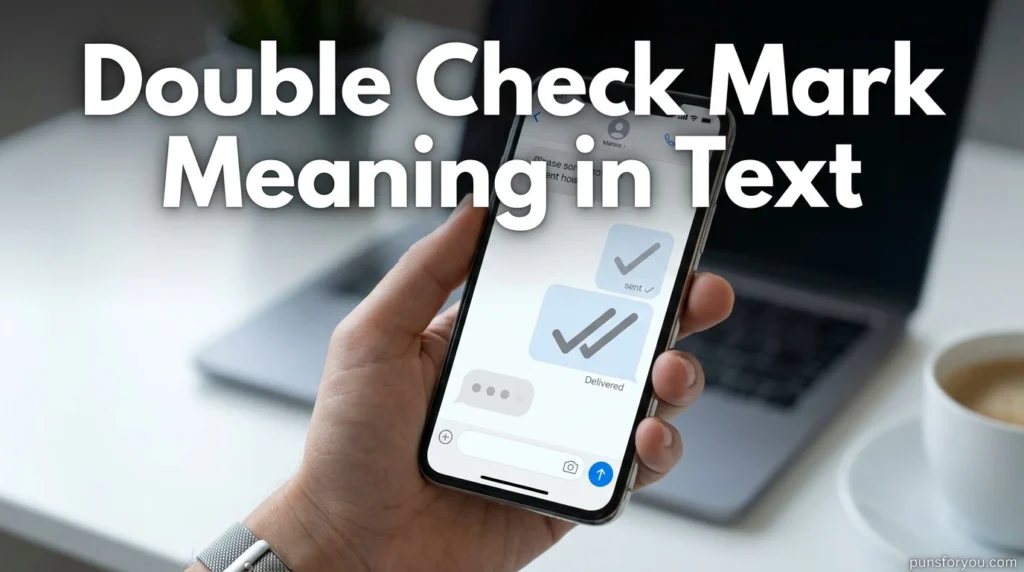
In today’s fast-paced digital world, small symbols can carry big meanings. Many people search for the “double check mark meaning in text” because they’ve seen it in messaging apps and aren’t quite sure what it implies. Is it a sign that someone read your message? Does it mean they ignored you? Or is it just a technical feature? Understanding these subtle signals is important because online communication lacks tone, facial expressions, and body language.
That means even simple icons can influence how we interpret conversations. Whether you’re chatting with friends, texting someone new, or navigating social media, knowing what the double check mark means helps avoid confusion, overthinking, and miscommunication. This guide will break it all down in a simple, friendly way so you can feel confident the next time you see it.
What Does Double Check Mark Mean in Text?
The double check mark meaning in text usually refers to a message status indicator in messaging apps. It shows whether your message has been successfully delivered to the recipient.
Short Meaning
- ✔️ = Message sent
- ✔✔ = Message delivered
- ✔✔ (blue or colored) = Message read (in some apps)
In simple terms:
- Two check marks mean your message reached the other person’s device.
However, the exact meaning can vary slightly depending on the platform.
Full Form and Basic Explanation
The double check mark does not have a “full form” like an acronym (e.g., LOL or BRB). Instead, it is a visual status symbol used in messaging systems.
What It Represents
- Delivery confirmation
- Message successfully received
- Not necessarily read (unless color changes)
Think of it like a digital version of “Your message has arrived.”
Origin and Rise in Popularity
The double check mark became widely known with the rise of instant messaging apps, especially in the early 2010s.
How It Became Popular
- Messaging apps needed a way to show message status
- Users wanted confirmation their texts were delivered
- Visual symbols became easier than written notifications
Over time, this feature became standard across many platforms. It also started influencing how people interpret conversations emotionally.
Why People Care So Much
- People associate it with being ignored or seen
- It adds pressure to reply quickly
- It creates curiosity (“Did they read it?”)
How Double Check Mark Is Used in Real Conversations
The double check mark isn’t something you type—it appears automatically. But people often talk about it in conversations.
Example Chat Situations
1:
- You: “Hey, are you coming today?”
- Status: ✔✔
- Thought: “Okay, they got the message.”
2:
- You: “Can we talk?”
- Status: ✔✔ (no reply for hours)
- Thought: “Why haven’t they responded yet?”
3:
- You: “Good morning 😊”
- Status: ✔✔ (turns blue later)
- Thought: “They’ve read it now!”
Platform-Specific Meanings
Different apps use the double check mark slightly differently. Let’s break it down.
Double Check Mark Meaning on WhatsApp
On WhatsApp, the system is very clear:
- ✔ = Message sent
- ✔✔ = Message delivered
- ✔✔ (blue) = Message read
Important Notes
- Blue ticks only appear if read receipts are on
- In group chats, blue ticks show after everyone reads it
Double Check Mark Meaning on Instagram
Instagram doesn’t use check marks in the same way, but it has similar indicators:
- “Seen” = Message read
- No check marks, but the concept is similar
People often compare this to double check marks from other apps.
Double Check Mark Meaning on TikTok
TikTok messages:
- No visible double check marks
- Shows “Seen” when read
Still, users may refer to “double ticks” casually when talking about message delivery.
Double Check Mark Meaning on Snapchat
Snapchat uses different icons:
- Filled arrow = Sent
- Opened icon = Read
No double check marks, but the idea of tracking message status is the same.
Difference Between Double Check Mark and Other Meanings
It’s important not to confuse the double check mark with unrelated meanings.
What It DOES Mean
- Message delivered
- Possibly read (depending on color)
What It DOES NOT Mean
- The person is ignoring you
- The person doesn’t care
- The person is busy or free
- A hidden emotional message
Common Confusions and Misinterpretations
Many people misunderstand the double check mark, leading to unnecessary stress.
Common Mistakes
- ❌ “They saw it and ignored me” (not always true)
- ❌ “They’re online but not replying on purpose”
- ❌ “Double ticks mean they read it instantly”
Reality Check
- They may be busy
- Notifications may show message without opening
- They may plan to reply later
Similar Slang Terms and Related Abbreviations
While the double check mark isn’t slang, it’s often discussed alongside texting abbreviations.
Common Related Terms
- Seen – Message read
- Delivered – Message received
- Ghosting – Ignoring messages
- Left on read – Read but no reply
Popular Text Slang
- LOL – Laugh out loud
- BRB – Be right back
- IDK – I don’t know
- TTYL – Talk to you later
How to Respond When You Notice Double Check Marks
Sometimes, the real question is: What should you do after seeing them?
1. Polite Responses
If they haven’t replied:
- “Hey, just checking if you saw my message 😊”
- “No rush, reply when you’re free!”
2. Casual Responses
- “Let me know when you get a chance 👍”
- “Just wanted to follow up!”
3. Flirty Responses
- “I know you saw that 😉”
- “Don’t leave me hanging 😄”
4. Boundary-Respecting Responses
- Wait patiently
- Avoid sending multiple messages
- Respect their time
Is Double Check Mark Still Popular?
Yes, but it’s more of a standard feature now than a trend.
Current Trends
- People rely less on ticks, more on actual replies
- “Seen culture” is more talked about
- Gen-Z focuses more on quick responses than symbols
Gen-Z Perspective
- Less overthinking (sometimes)
- More emphasis on vibe and timing
- Still aware of read receipts
When Double Check Marks Matter Most
They are most important in:
- Important conversations
- Work or professional chats
- Urgent messages
Less important in:
- Casual chats
- Group conversations
- Social media DMs
Psychological Impact of Double Check Marks
Even though it’s just a symbol, it can affect emotions.
Why It Feels Important
- Humans want acknowledgment
- Silence can feel like rejection
- Instant messaging creates expectations
Healthy Mindset
- Don’t assume intentions
- Give people time
- Focus on real communication
FAQs
1. What does double check mark mean in text messages?
It usually means your message has been delivered to the recipient’s device.
2. Does double check mark mean read?
Not always. It only means delivered unless it changes color (like blue on WhatsApp).
3. Why do I see double check marks but no reply?
The person may be busy, offline, or choosing to reply later.
4. Can someone read a message without double check marks turning blue?
Yes, if read receipts are turned off or they read from notifications.
5. Is double check mark a slang term?
No, it’s a messaging feature, but people often talk about it like slang.
6. What is the difference between one tick and two ticks?
One tick means sent, two ticks mean delivered.
7. Why do people overthink double check marks?
Because they try to guess the other person’s thoughts without real communication.
Conclusion
The double check mark meaning in text is simple once you understand it: it shows that your message has been delivered, and sometimes read depending on the app. While it may seem like a small detail, it plays a big role in how people interpret digital conversations. The key is not to overthink it. Double check marks don’t reveal emotions, intentions, or priorities—they’re just technical indicators. By understanding how they work across platforms and how to respond appropriately, you can communicate more confidently and avoid unnecessary stress. Next time you see those two little ticks, you’ll know exactly what they mean—and what they don’t.
